No products in the cart.
Can You Repair a Smart Appliance Yourself? What DIYers Need to Know in 2026
Your smart refrigerator just stopped cooling, and the touchscreen is flashing a cryptic error code. Your Wi-Fi-enabled washing machine won’t connect to the app. The question hits immediately: Can I fix this myself?
The answer in 2026 is more complicated than ever. Smart appliances blend traditional mechanics with sophisticated software, creating a repair landscape that’s dramatically different from fixing your grandparents’ fridge. But thanks to new Right to Repair laws and changing manufacturer policies, some repairs are more accessible than before, while others remain firmly in professional territory.
The Smart Appliance Repair Reality
Smart appliances aren’t just appliances anymore. They’re computers that happen to keep food cold or clean your clothes. According to industry data, smart appliance adoption has reached 31.4% in 2026, meaning nearly one in three households now owns at least one connected appliance.
This complexity changes everything about repair. When your traditional dryer stopped heating, you could replace the thermal fuse or heating element. But when your smart dryer displays “E7 error,” the problem might be a failed sensor, a software glitch, or a miscommunication between the control board and heating system. The physical part may be fine, it’s the digital brain giving wrong orders.
What Makes Smart Appliances Different?
Software-Hardware Integration
Modern smart appliances use motherboards that make real-time decisions. Your smart refrigerator’s compressor doesn’t just turn on and off; it runs at variable speeds based on dozens of sensor inputs and algorithms. A compressor that tests fine with a multimeter might still malfunction if the control board is sending incorrect commands.
Proprietary Diagnostic Tools
Manufacturers like GE, Samsung, and Whirlpool use specialized diagnostic systems that reveal information standard tools cannot. These systems show sensor history, error logs, and component communication patterns that are invisible to DIYers with basic equipment.
Parts Pairing and Software Locks
Until recently, many manufacturers used “parts pairing” software that prevented replacement parts from working unless authorised by the manufacturer. This practice is now illegal in several states starting January 1, 2026, but older appliances may still have these restrictions.
What Changed in 2026: Right to Repair Laws
The repair landscape transformed dramatically as new Right to Repair laws took effect across multiple states. As of January 2026, over 25% of Americans live in states with enforceable Right to Repair protections.
Colorado's Game-Changing Law
Colorado’s Consumer Right to Repair Digital Electronic Equipment Act prohibits manufacturers from using parts pairing to prevent repairs. This means you can now install aftermarket or used parts without software blocking them, a massive win for DIYers.
What Manufacturers Must Provide
Under new laws in California, Minnesota, Oregon, and Washington, manufacturers must make available:
- Diagnostic tools and software (often free of charge)
- Replacement parts on fair and reasonable terms
- Repair documentation and manuals
- Software updates addressing defects and security issues
The Catch: These laws apply to appliances manufactured after specific dates (typically July 2021 or later). Older appliances may still have repair restrictions.
Smart Appliance Repairs You CAN Do Yourself
Despite the complexity, several smart appliance repairs remain DIY-friendly in 2026:
1) Connectivity and Wi-Fi Issues
The number one complaint about smart appliances is Wi-Fi connectivity problems. Fortunately, these rarely require professional help:
Reset the Wi-Fi module
Most smart appliances have a reset button or key combination to restart wireless connectivity
Update firmware
Many connection issues stem from outdated software check your appliance’s app for available updates
Router positioning
Moving your router closer or adding a Wi-Fi extender often solves persistent dropout issues
2) Basic Mechanical Parts (When Software Isn't Involved)
Traditional components still fail on smart appliances, and many are DIY-repairable:
Door gaskets
Smart or not, a worn refrigerator door seal is a simple replacement
Water filters
Most smart fridges use standard filter cartridges that twist or slide out
Drain pumps
A clogged washing machine drain pump doesn’t care if your washer has Wi-Fi
Inlet valves
Water inlet valve replacement follows the same process as traditional appliances
3) Sensor Replacements (With Caution)
Traditional components still fail on smart appliances, and many are DIY-repairable:
Temperature sensors
Often accessible and relatively simple to swap
Door switches
Similar to traditional appliances
Water level sensors
Usually straightforward replacement
Critical Warning: After replacing sensors, some smart appliances require calibration or software acknowledgment. Check your model’s requirements before attempting repair.
Smart Appliance Repairs You Should NOT Attempt
Some repairs are genuinely dangerous or require professional expertise:
1) Refrigerant System Work
Modern smart refrigerators often use R600a (Isobutane), which is flammable. Any work involving the sealed refrigeration system requires:
- EPA certification (legally required)
- Specialized equipment
- Knowledge of proper handling procedures
Bottom Line: Never attempt repairs involving refrigerant lines, compressors, or evaporators on smart refrigerators.
2) Control Board Repairs and Reprogramming
While you might be able to replace a control board, programming it is another matter entirely:
- Manufacturers often require proprietary software to initialize new boards
- Incorrect programming can damage other components
- Many boards arrive “blank” and need professional configuration
4) Electrical Work Beyond Basic Components
Simple component replacement (like a heating element) is usually safe. But rewiring, diagnosing complex electrical faults, or working with high-voltage components requires professional training.
The Warranty Question: Will DIY Void Your Coverage?
This is where many DIYers hesitate and for good reason. The warranty situation in 2026 is nuanced:
Essential Safety Measures
What the Law Says
The Magnuson-Moss Warranty Act protects your right to perform basic maintenance and repairs without voiding your warranty. Manufacturers cannot void your entire warranty simply because you replaced a water filter or door gasket.
The Gray Area
However, if your DIY repair attempt causes additional damage, manufacturers can deny warranty coverage for that damage. Breaking a tamper seal, using non-OEM parts incorrectly, or causing electrical shorts during repair can void warranty claims.
Smart-Specific Concerns
Some manufacturers include separate 90-day coverage for “smart features and connectivity components.” Attempting DIY repair on Wi-Fi modules or touchscreen controls may void this specific coverage while leaving the rest of your warranty intact.
Best Practice
If your appliance is under warranty, especially for the component that’s failing, let the manufacturer handle it. Free repairs beat DIY satisfaction.
When to Call a Professional
Certain situations demand professional help, regardless of your skill level:
1) Error Codes You Can't Decode
If your appliance displays an error code not covered in your manual, a technician with diagnostic tools can identify the real problem
2) Intermittent Issues
Problems that come and go often indicate software conflicts or sensor communication failures that require professional diagnostics
3) Multiple Failed Components
When several parts seem to be failing simultaneously, the root cause is often a control board or power supply issue
4) Safety Concerns
Any repair involving gas, high voltage, refrigerants, or structural appliance integrity belongs in professional hands
5) Warranty Coverage
If the repair is covered under warranty, using the manufacturer’s service is almost always the right financial decision
The Smart Appliance Repair Toolkit
If you do attempt DIY repairs on smart appliances, you’ll need more than traditional tools:
Essential Tools
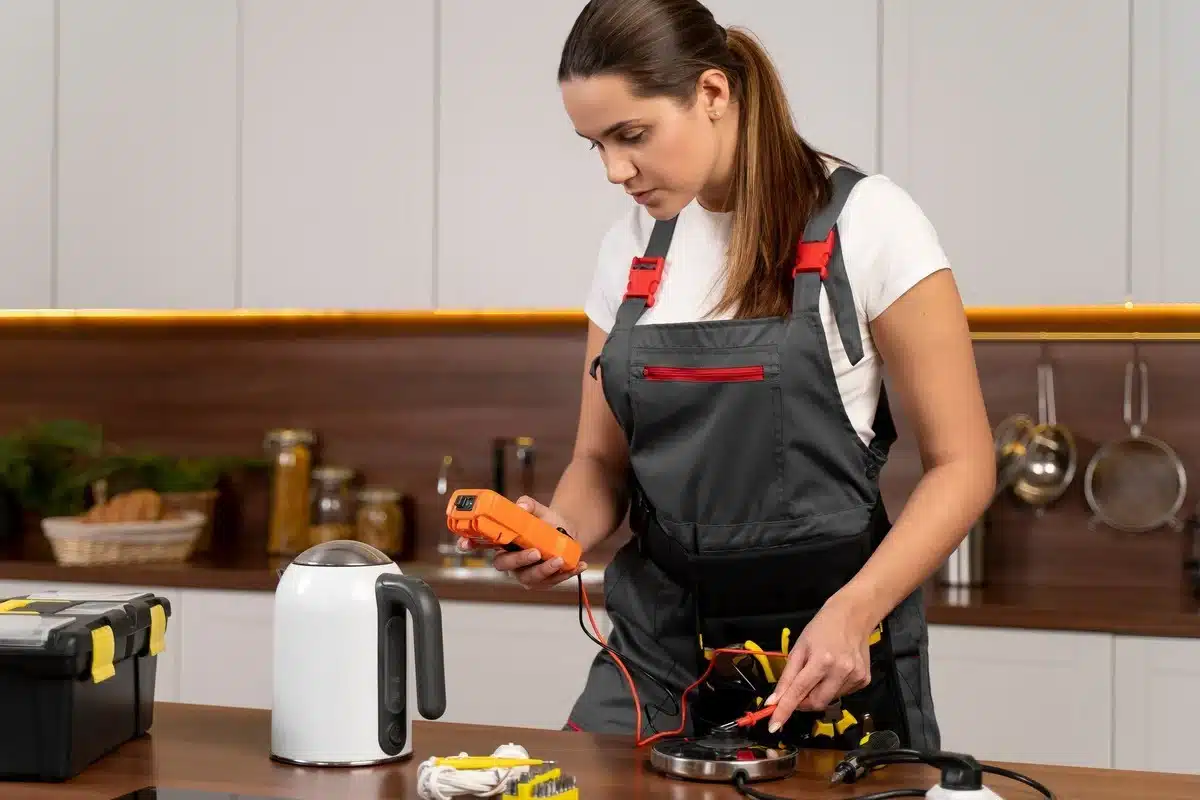
- Multimeter for electrical testing
- Screwdriver set (including security bits)
- Smartphone or tablet for accessing service manuals
- Camera for documenting disassembly
- Model number and serial number information
Helpful Resources
- Manufacturer’s app for error code lookup
- Model-specific repair guides
- Online forums for your specific appliance brand
- YouTube repair videos (verify they’re for your exact model)
Parts Sources
- Genuine OEM parts recommended for critical components
- Verify parts compatibility with your model number before ordering
- Keep packaging and receipts for returns
The Future of Smart Appliance Repair
The repair landscape will continue evolving through 2026 and beyond:
Expanding Right to Repair
More states are expected to pass repair legislation, with Connecticut and Texas laws taking effect mid-2026. By year-end, over 35% of Americans will have legal repair protections.
Manufacturer Adaptation
Companies are slowly adapting to new requirements, with some now offering DIY repair programs and better documentation access.
Software Support Concerns
Consumer Reports found that most manufacturers won’t guarantee software support for the 10+ years that consumers expect appliances to last. This creates a ticking clock on smart features.
Modular Design
Some manufacturers are experimenting with modular appliances where components can be easily swapped without professional help a trend that could revolutionize DIY repair.
Final Thoughts
The answer is: it depends.
You can repair a smart appliance yourself if the issue involves basic mechanical components, sensors, or connectivity problems, and if you’re comfortable troubleshooting technology with the right tools and documentation. DIY repairs make the most sense when the appliance is out of warranty and the work doesn’t involve gas, refrigerants, or high-voltage electrical systems.
However, DIY repair is not the right choice when your appliance is still under warranty, requires proprietary diagnostic software, or presents safety risks. If the repair cost approaches more than 50% of the appliance’s replacement value, professional service is usually the smarter investment.
Right to Repair laws in 2026 have made smart appliance repair more accessible than ever, but they haven’t eliminated the complexity. Smart appliances still demand caution, realistic skill assessment, and knowing when to stop.
When you decide to repair it yourself, success starts with using the correct parts. Appliance Parts Store offers a wide selection of genuine OEM replacement parts for smart refrigerators, washers, dryers, and other connected appliances, helping you repair with confidence, protect your investment, and avoid costly mistakes.
When in doubt, remember: a professional diagnosis is almost always cheaper than a failed DIY repair.
Can I really repair a smart appliance myself?
Yes, you can fix some issues at home, like Wi-Fi problems or basic mechanical parts. But repairs involving gas, refrigerants, or high-voltage electronics should always be left to professionals.
What’s the easiest smart appliance problem to fix at home?
Connectivity glitches are the most DIY-friendly. Simply resetting the Wi-Fi module, updating firmware, or adjusting your router can often restore full functionality.
How do I know if a repair is too dangerous?
If the repair involves gas lines, refrigerants, or internal high-voltage circuits, it’s risky. Certified technicians are trained to handle these safely.
Will DIY void my warranty?
Minor repairs like replacing water filters or gaskets usually won’t. However, tampering with smart controls, boards, or sensors can affect your warranty coverage.
What should I do before ordering replacement parts?
Always check your model number, read error codes carefully, and confirm if the part needs calibration or software recognition after installation.