
No products in the cart.
Appliance Reliability Is Declining: What New 2026 Data Actually Shows
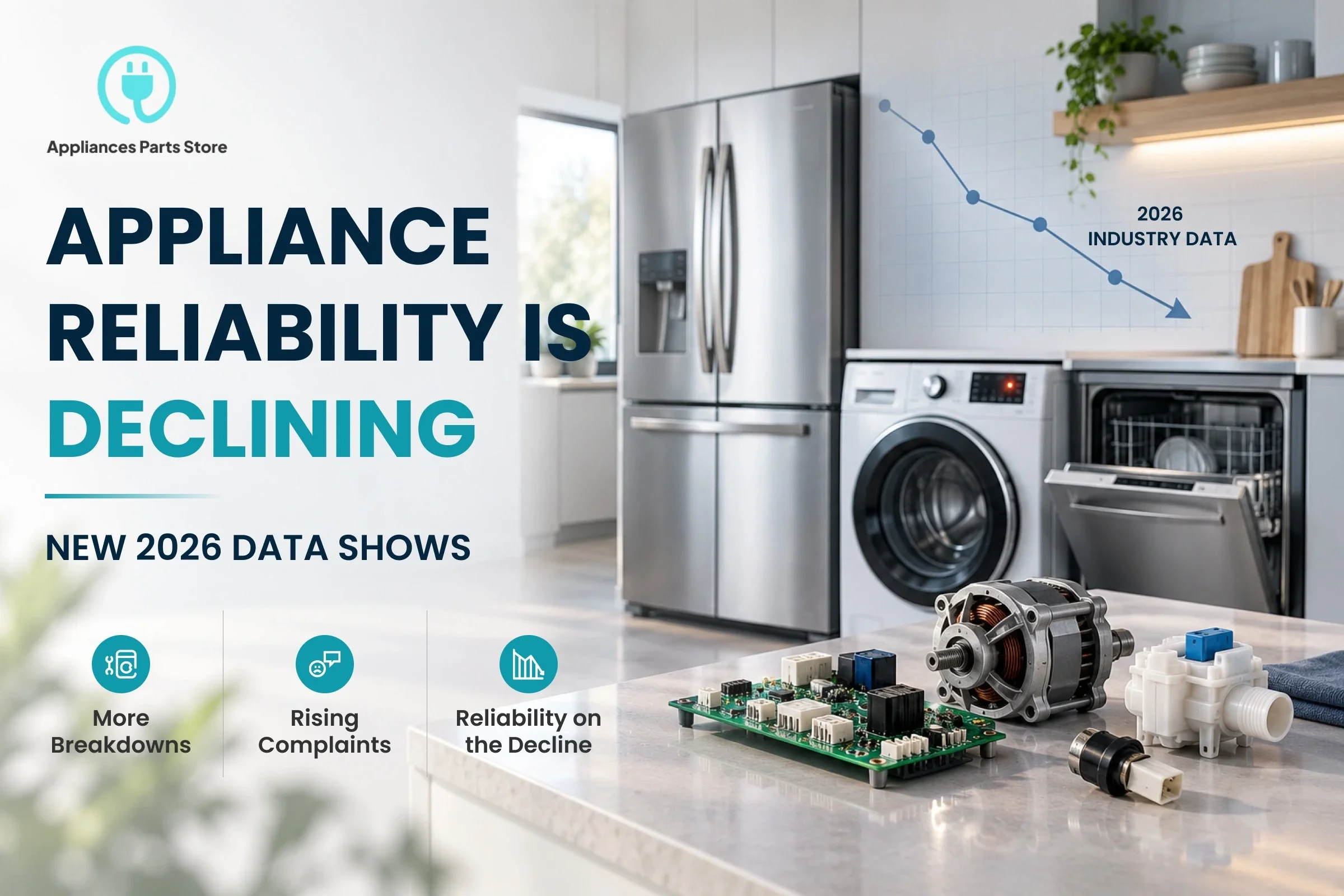
A new industry study just confirmed something a lot of appliance owners have suspected: satisfaction with major appliances slipped again in 2026. But the reason isn’t what you’d expect. According to the American Customer Satisfaction Index’s 2026 Household Appliance and Electronics Study, released September 15, repair service itself actually got faster and friendlier this year. Overall satisfaction fell anyway, because complaints are rising and product reliability is weakening. Here’s what the data actually says, and what it means if your appliance is one of the ones acting up.
What the 2026 Data Actually Found
Household appliance satisfaction landed at a score of 80 out of 100, down 1% from the year before, based on ACSI’s survey of over 21,000 people. Here’s the twist: the parts of the experience people usually complain about actually improved. Technician courtesy and repair timeliness both rose 4%, and call center satisfaction climbed 3%. Yet the overall score still fell. ACSI’s research director attributes that to a rise in customer complaints alongside weakening product reliability, meaning appliances themselves are needing attention more often, even as the service that responds to them gets better.
So What's Actually Going Wrong?
The story isn’t that repair has gotten harder to arrange. It’s that appliances are generating more of a need for it. That’s a meaningfully different problem, and one that a faster call center or a friendlier technician can’t fully offset. The brand-level results back this up: Electrolux posted the steepest decline among returning brands, down 3% to 78, while two brands new to the ranking, Hisense and Midea, entered at the lower end of the field.
What This Means If Your Appliance Is Acting Up
If reliability across the industry is trending down, more people are running into a failing part sooner than they expected to. The upside in this data is that the receiving end of a repair, the technician, the call center, the scheduling, is genuinely working better than it used to. That’s true whether you call a service company or source the part yourself. Either way, there’s less reason to put off dealing with it.
Dealing with a reliability issue right now?
Which Brands Improved, and Which Didn't
| Brand | 2026 Score | Change |
|---|---|---|
| Haier (GE, Haier, Hotpoint) | 82 | Up 3%, new industry leader |
| Bosch | 81 | Up 1% |
| Electrolux | 78 | Down 3%, steepest decline |
| Hisense | 76 | New entrant |
| Midea | 75 | New entrant |
The Bigger Pattern: Why This Matters for DIY Repair
As complaints rise industry-wide, knowing how to diagnose an issue and get the exact part matters more than which brand’s logo is on the front. It’s also worth knowing your rights here: a denied warranty claim or a slow service queue doesn’t have to mean waiting around while a reliability issue gets worse.
Not sure which part is failing?
Frequently Asked Questions
Is appliance repair getting harder to arrange?
Not according to the 2026 data. Technician courtesy and repair timeliness both improved. The decline in overall satisfaction comes from rising complaints and reliability issues, not repair access.
Which appliance brand has the highest satisfaction in 2026?
Haier, which includes GE and Hotpoint, leads at a score of 82, up 3% from last year.
What is the ACSI?
The American Customer Satisfaction Index, a national benchmark that has tracked customer satisfaction across industries for over 25 years, based on tens of thousands of surveyed customers annually.
Why did overall appliance satisfaction fall if service improved?
Because rising customer complaints and weakening product reliability outweighed the service gains, according to ACSI’s research director.
Does this mean I should replace my appliance instead of repairing it?
Not necessarily. Industry-wide reliability is trending down across nearly every brand, so a new unit isn’t guaranteed to be more reliable. Fixing the specific failed part is often the more predictable option.